Talking of a metal’s usability, the versatile ones get the top spot. This is where cupronickel’s alloy comes into play. It actually is a master of all trades when formulated correctly because it combines strength, resistance, and easy processing.
Copper-nickel is a versatile alloy. From marine pipes and ship hulls to condensers and power plants, a number of industries benefit from copper-nickel alloy, thanks to its unique properties.
Let’s have a thorough look at what it is, how it is formulated, where it is mostly deployed, and most importantly, how to make sure you get the ideal formulation for your specific use case.
What is A Cupronickel Alloy
Copper-nickel alloy is a metal alloy using copper as the main element, combined with nickel. Other metals in tiny quantities include iron, manganese, and sometimes zinc as well.
Unlike pure copper, this mixed formulation means you get higher resistance to corrosion, better thermal performance, longer life-span, and easy manufacturing.
Cupronickel Alloy Composition
Copper is the main element in this alloy, followed by nickel as the second largest contributor. Besides, iron and manganese are there to enhance the alloy’s properties. The usability of cupronickel allows for any specific purpose depends on how the composition is balanced for specific properties. Below are some of the most desirable compositions:
- 90 to 10 ratio
In many industries, the alloy using 88% to 90 % copper and up to 10% nickel is preferable. It uses less than 1% each of manganese and iron.
- 70 to 30 ratio
Sometimes, the specific applications call for a bit higher nickel content. Here, copper is used 66% to 70% in the formulation and nickel gets 29% to 30% share with iron and manganese below 1% each.
In addition to the above mentioned more common compositions, sometimes, the manufacturers go for tiny traces of silicon and carbon as needed. They do this to make the final alloy easier to process or improve its strength.
| Cupronickel Grade | Copper (Cu) | Nickel (Ni) | Iron (Fe) | Manganese (Mn) | Notes |
| General Composition | Balance | Secondary element | Trace | Trace | Properties depend on how elements are balanced |
| 90/10 Cupronickel | 88–90% | Up to 10% | < 1% | < 1% | Good corrosion resistance, cost-effective |
| 70/30 Cupronickel | 66–70% | 29–30% | < 1% | < 1% | Higher strength and erosion resistance |
| Modified Grades | Balance | Varies | Trace | Trace | Small additions of silicon or carbon may be used to improve strength or processability |
Properties of Copper-Nickel Alloy
Co-Ni alloy has a set of very desirable physical properties that increase its demand in industries with harsh environments. Here is what makes it a balanced alloy:
- Exceptional Resistance to Corrosion
This alloy doesn’t rust easily. It has higher resilience than copper even in salty, marine, chemical-laden, and humid settings.
- Higher Strength
It’s more durable and hence can last longer even when used consistently.
- Ideal Thermal Stability
Cupronickel alloys are stubborn when it comes to enduring temperatures. They can show stable performance at temperatures as high as 600 degrees Celsius.
- Minimum to No Biofouling
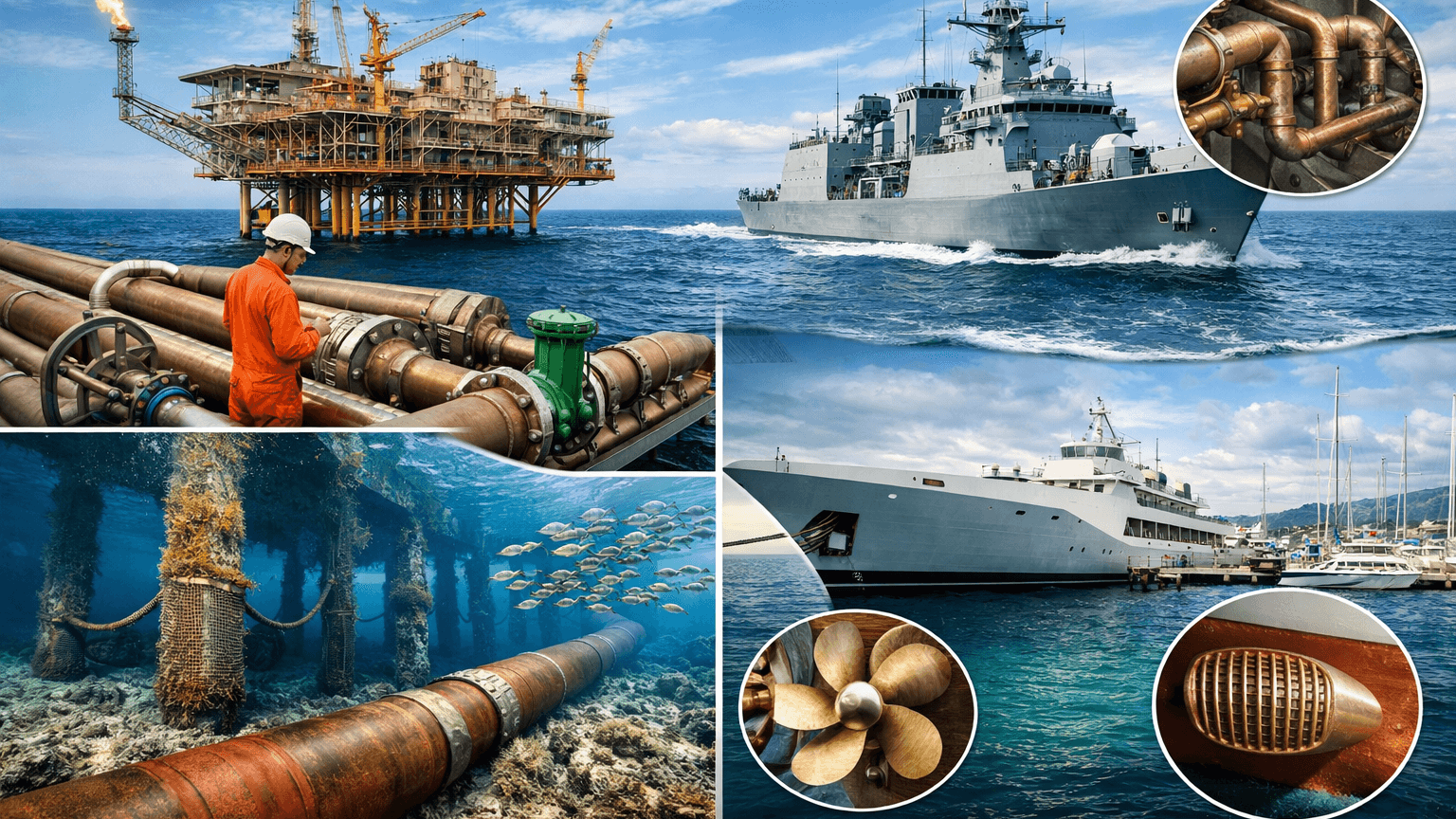
The reason why we see this alloy so much in the marine industry is that it virtually minimises the maintenance expense incurred due to biofouling i.e., build-up of marine organisms on the ship’s surface.
- Reasonable Electric Conductivity
The alloy isn’t as good at electrical conductivity as copper, but it does offer reasonable conductivity, making it suitable for targeted applications.
- Easy Processing
The addition of trace elements makes it more easily weldable and more ductile.
Different Grades of Cupronickel
There are several industrial grades of cupronickel, each one suitable for unique use cases. Let’s have a look at some common ones:
| Cupronickel Grade | Properties | Applications |
|---|---|---|
| 90/10 Cu-Ni | Good corrosion resistance, cost-effective option for moderately harsh conditions | Seawater piping, condensers |
| 70/30 Cu-Ni | Higher strength, superior erosion resistance for a longer life span | Offshore systems, heat exchangers |
| CuNi with Fe/Mn | Enhanced resistance to impingement attack | Marine hardware, pumps |
| Custom Cu-Ni Grades | Tailored composition and dimensions according to use cases | Specialized industrial projects |
Where 90/10 Cu Ni is good for general seawater equipment and offers good thermal conductivity, it is less preferred as compared to 70/30 CU Ni in high-velocity marine water, and where high thermal conductivity can be traded off.
Common Applications of Cupronickel Alloy
Its diversity makes it a high-demand alloy with profit potential for businesses and retailers as well. Its unique formulation makes it a good fit for the following industrial use cases:
Marine Industry
The marine equipment extensively uses cupronickel because it can withstand salty water and resists biofouling. It is used in making ships and offshore platforms. Moreover, desalination equipment also utilize their marvellous resistance.
Power Sector
Cupronickels are often among the most favoured alloys used in cooling systems and heat exchangers because they can endure high temperatures without losing their structure.

Chemical Industry
This alloy has the ability to bear highly corrosive chemicals and keep its structure intact. Hence, it is used in piping where the fluids flowing through them are harsh and corrosive.

Desalination Plants
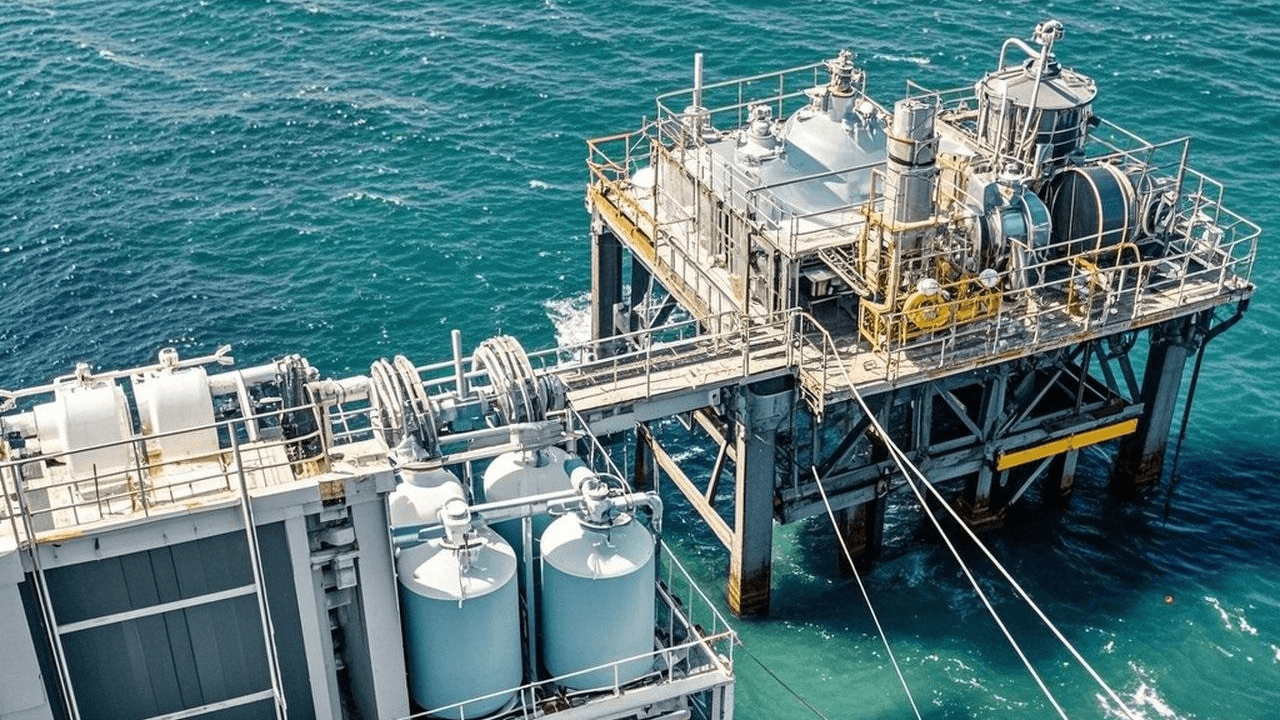
Copper-nickel is strong enough to resist chloride. This makes it a good choice for water treatment plants and desalination equipment.
Quality Standards to Look for
B2B buyers, retailers, and businesses need to be cautious about compliance while choosing a cupronickel manufacturer. The products that meet the accepted standards can be shipped globally without restrictions.
The standards like ASTM, EN, and ISO are your tickets to new markets across the globe because they ensure quality and environmental safety. Only go for those metal suppliers that are willing to show compliance certificates.
Manufacturing Process of Cupronickels
The manufacturing of this alloy consists of various stages.
- It starts with melting the metals copper and nickel under controlled conditions. The ratios are kept precise, for 90/10 or 70/30 grade alloy, also melting the precise quantities of trace elements.
- In compliance with ASTM and EN standards, the molten elements are analyzed for precision at the alloying phase, and the manufacturer must ensure uniformity in the composition according to the standards
- At the casting, ingots or billets are made, or you can also go for slabs as needed.
- To be sure about the accuracy of dimensions, some manufacturers go for cold rolling. It also increases the strength of the alloy. At Vista Global Metal, it is followed by heat treatment to release the stress in the microstructures.
- The alloy is finally checked for precision, accuracy, and dimensions, and surface finishing is done. The certified manufacturers, like Vista Global Metal, go for obtaining the necessary certification once the final finishing is done.
At Vista Global Metal, with our two decades of experience, we boast about a rigorously monitored manufacturing process where each stage is supervised closely. We make sure that the final product fulfills the unique needs of each client.
How to Choose the Perfect Cupronickel Grade?
Keep in mind the following considerations for a learned choice:
- Environment: go for more corrosion resistance for the marine industry or for humid environments
- Durability Requirements: looking for a long-term product? Select the more durable variety e.g the 70/30 grade
- Thermal Performance: if the final product is to be used in high-temperature settings, tailored grades with good thermal performance should be your answer
- Ease of Processing: Some grades are manufactured for ease of welding and processing. Select the grade with a bit higher zinc content if that is your preference
Why Choose Vista Global Metal?
We, at Vista Global Metal, have 20 years of experience in the metal industry. We understand how the industry has been shaping over the decades and what helps retailers get to the top by filling the gaps.
We provide complete customization from material selection and tailored formulation to branding needs.
Our cupronickel alloys are fully in accordance with the accepted global standards of safety, environmental protection, sustainability, and quality.
Whether you are looking at a huge project or just putting your first steps into the industry, we facilitate both established businesses and new startups.
FAQs
Which is the most common Cupronickel grade?
The Cu Ni 90/10 and Cu Ni 70/30 are among the most common grades.
What is cupronickel alloy mainly used for?
It is used in marine systems, heat exchangers, and chemical processing equipment. It is also used for electrical components because of its corrosion resistance and durability.
Can Vista Global Metal provide custom cupronickel specifications?
Yes, we offer customized alloys according to your specification, such as dimensional, compositional, and performance requirements.
Is cupro nickel better than copper?
In a lot of industrial applications, yes. While pure copper offers high conductivity, cupro nickel provides superior corrosion resistance with durability and longer service life. Thus, a better choice for demanding commercial and industrial use cases.
Does Vista Global Metal’s cupronickel comply with international standards?
Yes, our high-quality cupronickels follow ASTM, EN, and ISO standards.